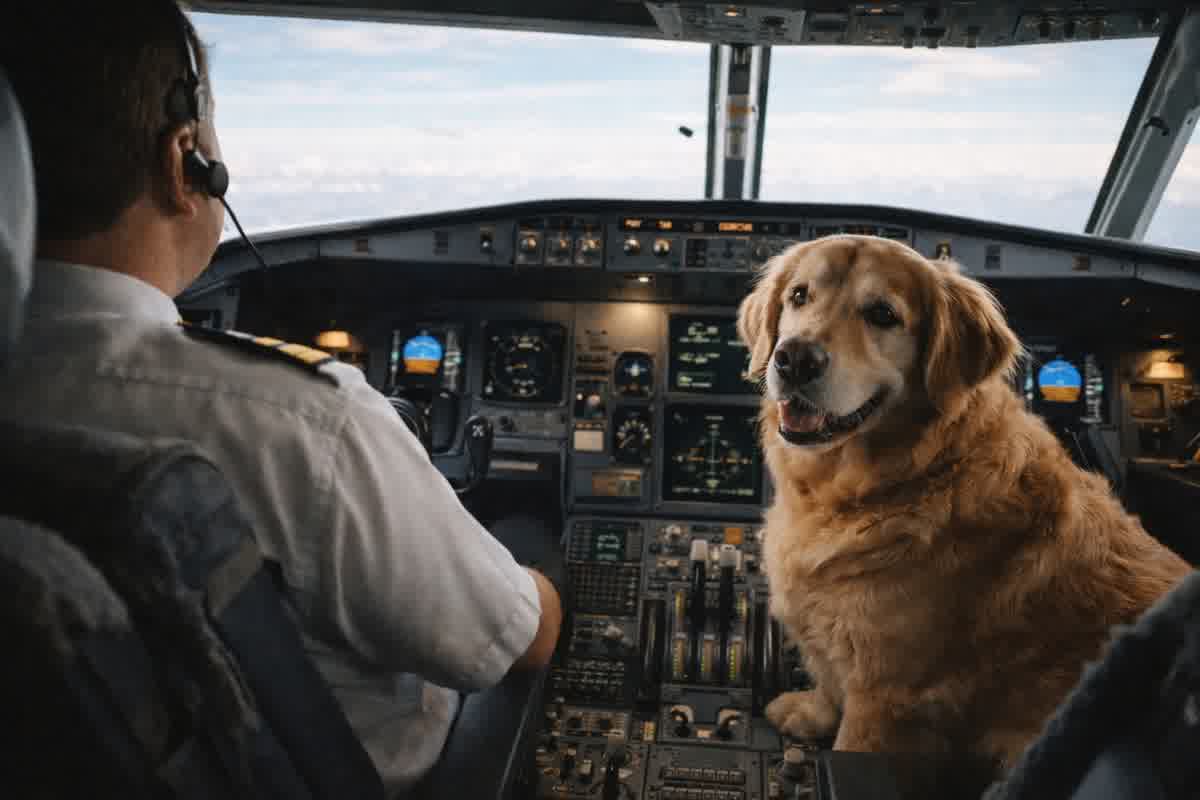
Real criteria to decide a cabin or warehouse in Golden and Labrador: container size, pressurization, stress, documentation and critical points before buying tickets.
A Golden or Labrador does not fail for “misbehaving” at the airport. It fails due to a decision made weeks before: assuming that the cabin and the hold are two versions of the same trip.
In consultation, the mistake we see most in Trujillo is choosing a mode of transportation without measuring the dog and without understanding what “pressurized warehouse” means. At check-in that confusion is no longer corrected.
This text organizes the criteria for golden and Labrador dogs in flight without promising shortcuts or selling peace of mind: the cabin is almost never a matter of will, and the hold is not synonymous with abuse.
Cabin is designed for a container that fits under the front seat. The controlling parameter is the useful volume, not the weight on a scale. A puppy can fit where an adult cannot, even if they are the same breed.
Adult Goldens and Labradors are usually left out for withers height, chest width and body length. The practical point is simple: if the dog cannot enter, turn and lie down without compressing the thorax and abdomen, it is not in a position to travel in that space.
When a family insists on “trying in the cabin,” what they end up paying for is a last-minute change of plan: relocation to the warehouse, repacking, acute stress due to handling, and extra time in the boarding area. That is the scenario that is avoided by planning with real measures.
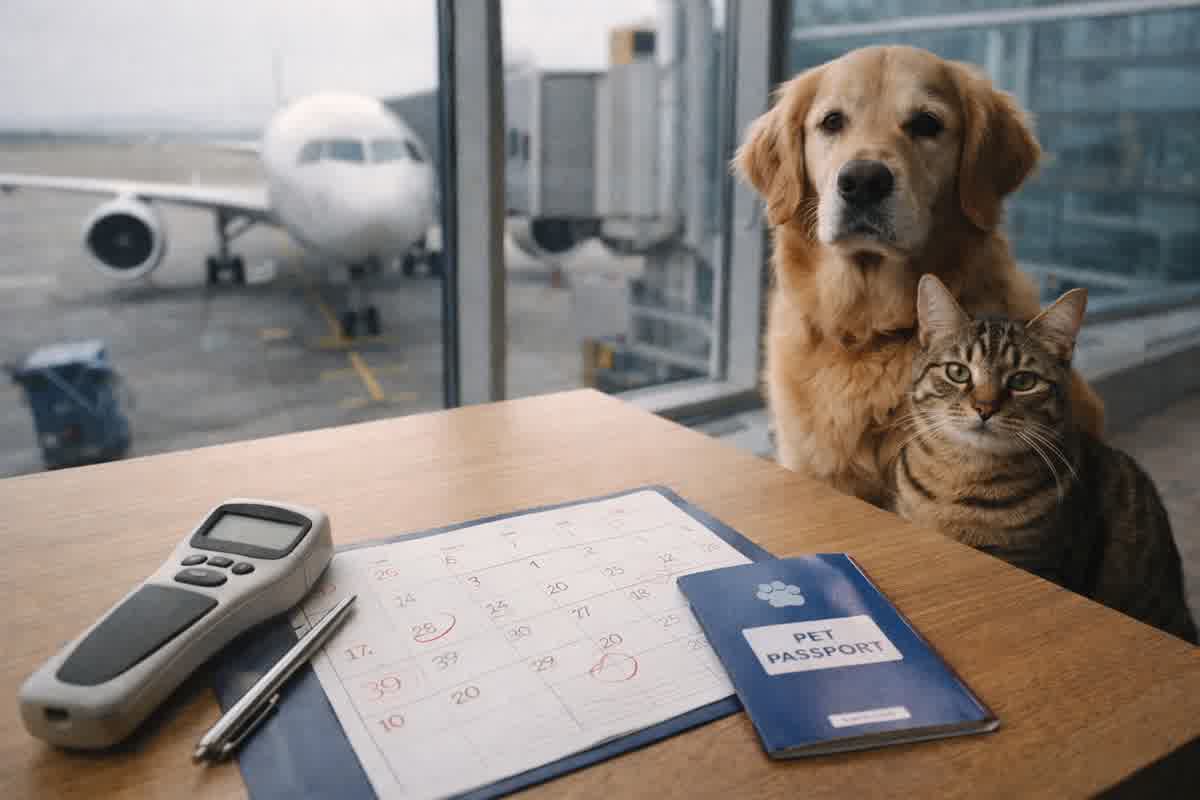
The animal hold on commercial flights is not an airless compartment. In standard operation, the pet area travels with temperature control and pressurization connected to the aircraft system. That does not make it a hospital room: it is still a hypobaric environment, with a lower partial pressure of oxygen than at sea level.
A healthy dog compensates for this drop with normal physiological changes: increases ventilation, adjusts heart rate and maintains saturation within compatible ranges. The margin narrows when there is obesity, advanced age, respiratory disease or anxiety that triggers sustained panting.
If you need the technical foundation of hypobaria and pressurization, it is developed in Hypobaric physiology in air transport of dogs and cats: pressurization, oxygen and physiological response in commercial flight. In clinic we use it to explain why an “uneventful” trip depends more on physiology and preparation than on luck.
The size is the main reason why they end up in the cellar, but it is not the only one. Golden and Labrador have different risk profiles due to body condition and thermoregulation. An overweight Labrador with resting panting is not evaluated the same as an athletic Golden with good exercise tolerance.
The variable that is most underestimated is heat. The dog does not “calm down” inside the container if it arrives with a high temperature, excitement and rapid breathing. The airport environment, waiting and handling can keep you panting for hours. In large dogs, this pattern increases respiratory cost and increases dehydration.
Another real variable is the behavior inside the container. A dog that throws itself against walls, bites the door or hits itself trying to get out is not “stubborn”; is in panic. This behavior transforms a technically safe transfer into a trip with risk of injury, and is corrected with prior training, not on the day of boarding.
In the hold, the container functions as a harness and helmet at the same time. It should allow a natural posture, complete turn and rest with supported sternum, without the ceiling straining the neck. In Golden and Labrador the typical mistake is to buy by “maximum” weight, and end up with a space that does not respect proportions.
Ventilation is another critical point. The side vents do not compensate for a door with little air intake if the dog is panting. A rigid door, firm closures and material that does not collapse under side loading are operational requirements, not aesthetics.
For international flights from Peru, the container also becomes part of the documentary process: labels, visible identification and compatibility with inspections. In Trujillo we see that many delays come from correcting simple details when there is no longer time margin.
The cabin or hold decision is made after measuring: height at the back, length from the tip of the nose to the base of the tail and width of the thorax. With these measurements, the container is chosen and it is planned if the cabin is physically possible. Without numbers, everything else is opinion.
Clinical status is defined by examination and history, not by “it looks good.” A dog with a recent cough, exercise intolerance, gastrointestinal crisis or osteoarticular pain changes category. The health certificate has a validity window and is issued based on a real clinical condition, not on an intention to travel.
The documentary chain is built in order. Microchip, vaccinations, certificates and endorsements are not interchangeable parts. When the order is reversed, the error can be irreversible and force deadlines to be restarted. This logic is described in the technical series because it is the same pattern that is repeated in consultations in Trujillo and in other parts of Peru.
A bad choice of mode can leave your dog off the flight the same day, with health deadlines that no longer fit and expenses that are not recovered. Zoovet Travel puts together the file, defines the clinical plan and tells you with measurable criteria whether golden and Labrador dogs in flight are resolved in the hold or if there is a real cabin option. Contact: WhatsApp and agenda at Zoovet Travel (Trujillo, Peru). We work with documentary traceability, not with screenshots and assumptions.
Calle Cuba 241, Urb. El Recreo — Trujillo, Perú