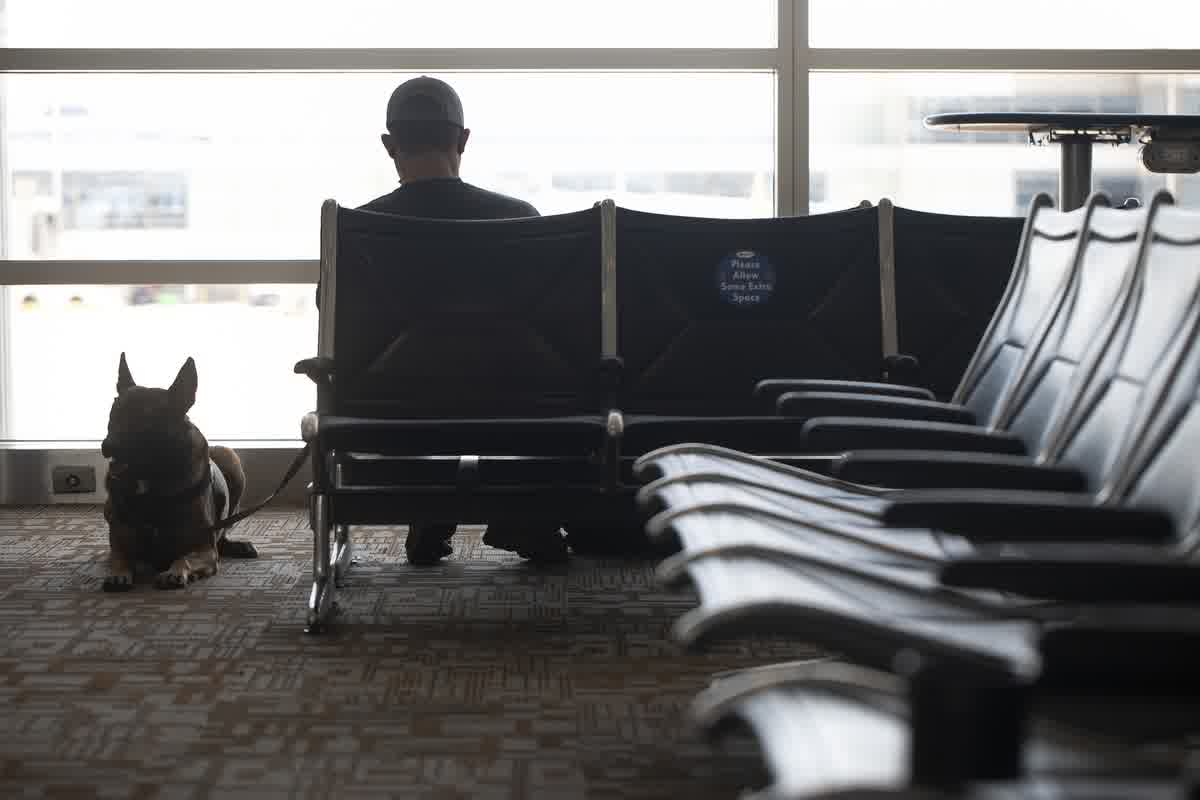
What happens to a dog or cat if it is rejected at customs: who decides, retention, quarantine, re-dispatch and documentary failures that activate sanitary measures.
Border control is not a courtesy check. It is an administrative decision with health support. When the file does not match the animal that arrives, the authority at the point of entry applies measures that are carried out in hours, not weeks.
The question appears late, almost always at the airport: “What happens to my pet if I am rejected at customs?” There are three typical exits: retention, quarantine or redispatch. The selection depends on the country's regulatory model and the type of failure.
At customs, the airline does not decide and the check-in staff does not decide. The import health authority or the border control authority with veterinary competence decides. They work with a simple criterion: the document must identify the animal, and the document must be within its time window.
The error that we see most in consultation is the file created as a checklist. Papers are gathered, but dependency is not verified. A microchip written with a different digit, a vaccine administered out of sequence, a certificate issued outside the window. At the border, this is interpreted as failed identity or traceability, not as a “correctable detail.”
The owner usually asks “to check it again.” The authority can review, but cannot rewrite clinical facts. If the country's model allows for correction at the border, it will do so within its framework. If the model does not allow it, the decision is executed with the file as it arrived.
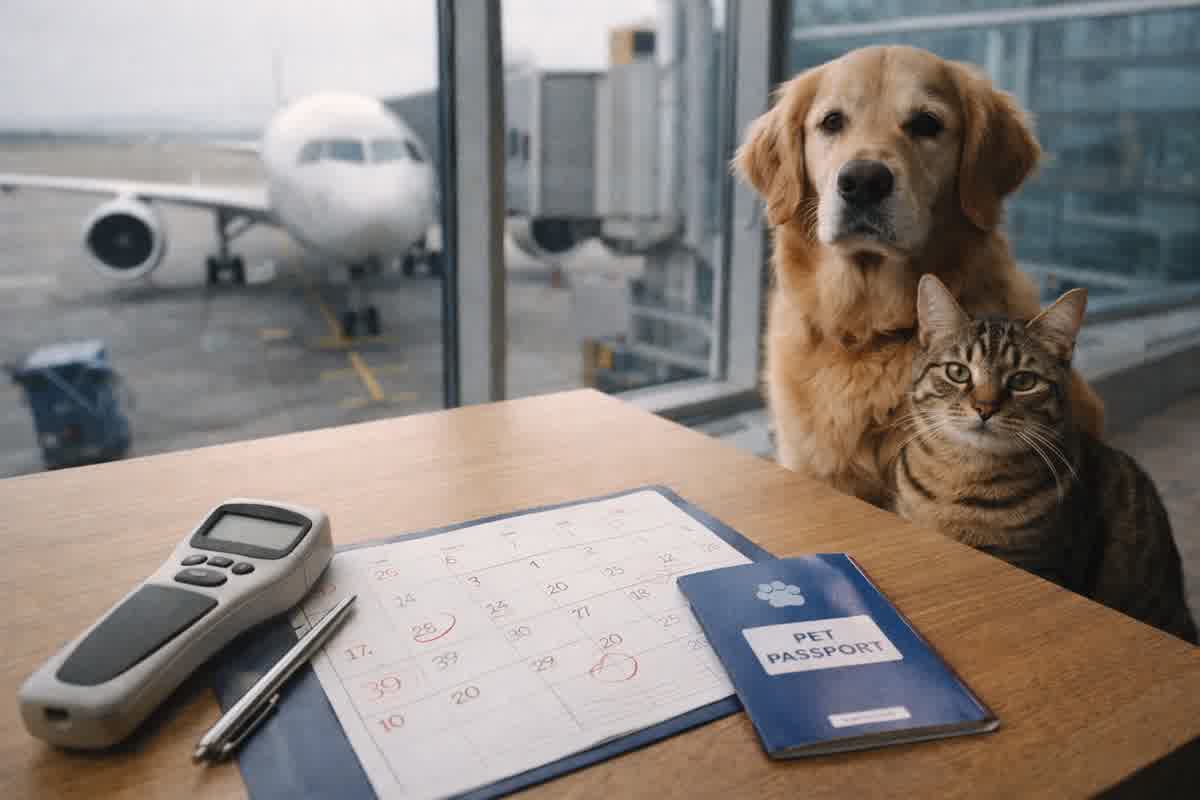
Retention means that the animal is held in custody while the case is evaluated. It can occur in an airport inspection area, at authority facilities, or at a designated establishment. Operationally, retention exists to prevent entry without resolving health identity or epidemiological risk.
Quarantine means isolation under official supervision. It is not a punishment; It is a biosecurity tool. It is activated when the risk cannot be ruled out with documents, or when the country operates with a routine or conditional quarantine model. The logic and regulatory models are developed in Quarantine in the International Importation of Dogs and Cats: Epidemiological Basis, Regulatory Models and Critical Failure Points because the decision is not uniform between destinations.
Reshipment means return to the country of origin or to an authorized third country. When it occurs, it is usually because the regulatory framework does not allow local regularization or because the animal does not meet a basic eligibility condition. In practice, re-issuing becomes probable when the error affects identity, rage or official certificates.
Time window errors lead to retention or immediate rejection depending on the destination. A clinical certificate valid for 10 days that arrives expired is not revalidated at the border; It is considered a non-current document. In countries with retention authority, the possible exit is custody while it is decided whether to allow reissuance under local control.
Identity errors lead to quarantine or re-dispatch. Illegible microchip, different number between documents, or absence of verifiable identification break traceability. In consultation, this error arises from readings without a compatible reader or from manual transcription, and at the border it results in a file that does not correspond to the animal present.
Mistakes of rage push to the harshest measure of the system of destiny. A primary vaccination applied with fewer waiting days than required by the norm, a vaccine registered without the correct sequence, or a non-existent titration when it is mandatory. When rabies is at stake, the authority tends to choose the path with the least health risk, even if it is the most costly for the owner.
Detention and quarantine have costs for custody, accommodation, clinical evaluation and logistics, and in many destinations they are charged to the owner. The clinical point is this: the acute stress of transportation and retention impairs food tolerance, rest, and behavior. That's not sentimentality; changes management and may complicate clinical evaluation during custody.
Reshipping adds a logistical risk: coordinating a return transport with an animal that has already been rejected and that may be subject to specific movement conditions. If the country requires Manifest Cargo for departure after rejection, the room for maneuver is reduced. In clinical practice, what people do not anticipate is that a rejection also consumes documentary windows, and the same file may be invalid for the return flight.
Define the exact destination and its control model before scheduling clinical actions. There are countries that allow local corrections under supervision and countries that require re-dispatch with no intermediate option. Without this information, the owner believes that a reissue of the certificate at the border is always viable, and that is not true.
Build the file as a string, not as a folder. Verifiable identification, vaccine in sequence, current time windows, and official document issued by the competent authority. When one fails, the entire file becomes fragile and the entry point treats it as a risk, not as an incomplete procedure. That's the core of the problem when I get rejected at customs.
Simulates pre-travel control: reading the microchip with a compatible reader, checking that each number matches, and checking that the clinical certificate is within its window on the actual day of departure. In this review, most of the reasons why I am rejected at customs are detected, because it is almost never a “surprise failure” of the destination.
A rejection at the border can end in detention, quarantine or re-dispatch, and each departure has costs and times that are not negotiated at the counter. Zoovet Travel audits the clinical and documentary file, validates sequence and windows, and prepares the case for entry control from Trujillo, Peru. A file reviewed as a chain reduces corrective decisions at the point of entry.
Calle Cuba 241, Urb. El Recreo — Trujillo, Perú