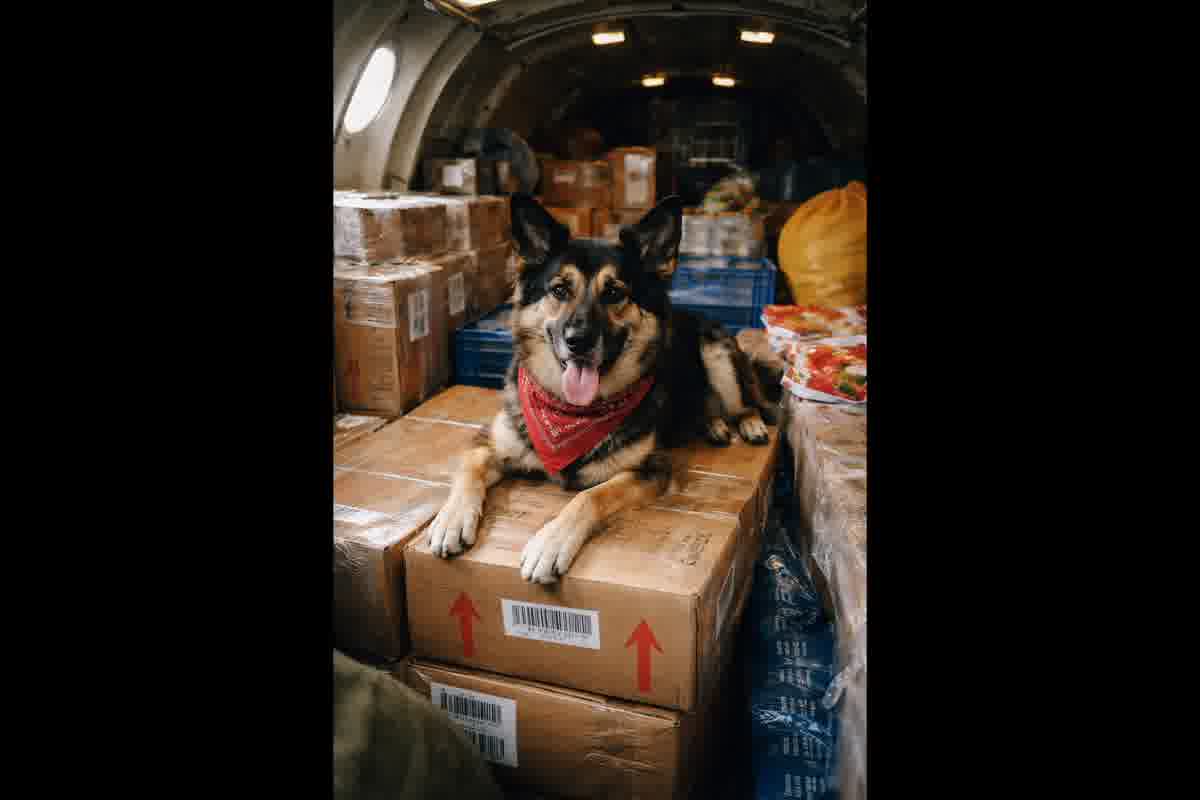
Medical-veterinary analysis on hold safety in international flights. Hypoxia, temperature and metabolic stress explained by Dr Jessica Camacho.
The safety of an animal in the cargo compartment does not depend on luck but on strict compliance with physiological thresholds that most owners ignore when buying a ticket. In-flight deaths are usually the final result of undetected pre-existing pathology or breed vulnerability that collapses under the mild hypoxia of the pressurised cabin. In Trujillo we constantly receive families who assume the hold is a dark, airless place, when the real danger lies in temperature management on the ground and individual metabolic response.
Modern commercial aircraft holds are pressurised and climate-controlled, maintaining an equivalent altitude of 6,000 to 8,000 feet during cruise. At that altitude, partial pressure of oxygen decreases, forcing the animal’s cardiovascular system to work harder to maintain tissue perfusion. A dog with incipient heart disease or a cat with undiagnosed chronic kidney disease can enter organ failure simply from inability to compensate for this drop in ambient oxygen.
The cargo compartment maintains the same atmosphere as the passenger cabin but lacks the visual monitoring that would allow detection of stridorous panting or a seizure in time. Safety depends on a fit-to-fly assessment by a veterinarian who understands Boyle’s Law and how gases expand in body cavities during ascent. Technical details on this response are set out in the parent article Hypobaric physiology in air transport of dogs and cats: pressurisation, oxygen and physiological response in commercial flight.
Hold isolation triggers activation of the hypothalamic–pituitary–adrenal (HPA) axis, releasing massive levels of cortisol and catecholamines into the bloodstream. This fight-or-flight response is especially critical in cats, who can develop hepatic lipidosis after short periods of anorexia induced by transport panic. Turbine noise and cargo movement are not just auditory nuisances; they are zeitgebers that desynchronise circadian rhythm and alter intestinal microbiota, weakening the animal’s immune barrier before arrival.
What people do not anticipate is that a sedated animal is more likely to die in the hold than an alert one, because drugs depress thermoregulatory capacity and response to hypoxia. Pharmacological sedation is prohibited by most airlines and by international veterinary export protocols. Real preparation for safe pet travel in the hold includes ethological conditioning to the carrier for at least eight weeks to reduce central nervous system reactivity without compromising vital functions.
The most severe thermal risk occurs while the aircraft is on the ground, where the cargo compartment air-conditioning may be less efficient than in flight. Waits on the tarmac at airports with temperatures above 27 °C represent a direct heat-stroke threat, especially for dense-coated breeds or overweight animals. The airline has the authority to deny boarding if temperatures at origin, transit or destination exceed the safety margins set by IATA to protect the animal’s life.
In our Trujillo practice we have seen how choosing an unsuitable layover in a tropical climate invalidates any other safety measure taken beforehand. An animal suffering thermal stress in the hold loses the ability to pant effectively to cool its blood, leading to cerebral oedema or multiorgan failure within minutes. Safety is a chain where the weakest link is often ground logistics, not time spent at 30,000 feet.
Deep cardiac and respiratory assessment is the mandatory first step to determine whether international cargo transport is viable. A quick auscultation is not enough; biochemical profiles and in many cases imaging are required to confirm the patient can tolerate the metabolic stress of the journey. An animal arriving at the airline counter with signs of dysbiosis or dehydration will be rejected by ground staff, generating rescheduling costs and additional stress for the family.
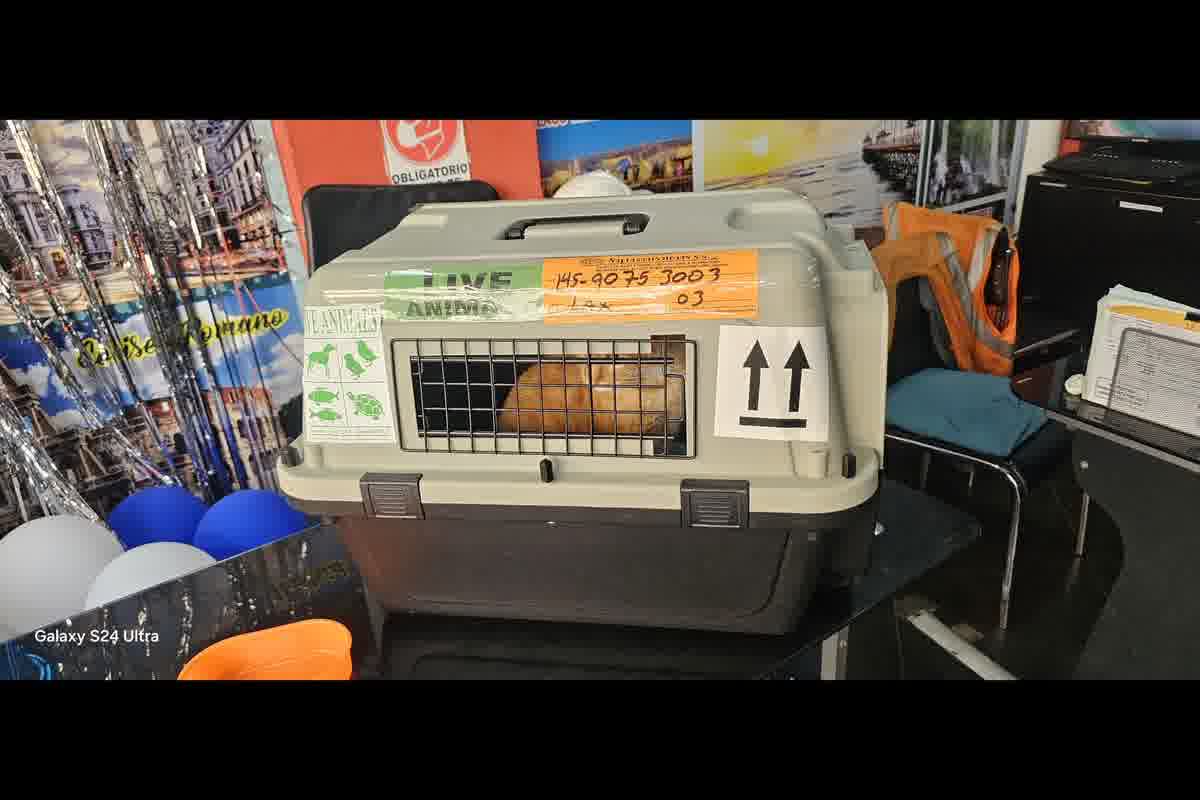
The carrier must strictly comply with IATA LAR regulations, ensuring the animal can stand, turn and lie down in a natural position without touching the walls. An undersized transport crate restricts airflow and accelerates temperature rise from radiant body heat, becoming a thermal trap. The material must be rigid, with metal closures and ventilation on all four sides, ensuring the physical infrastructure protects the animal from external impacts during baggage handling.
Hydration must be managed via drip drinkers or frozen containers that melt gradually, avoiding water spillage in the first minutes after take-off. A dehydrated animal has more viscous blood, which hinders oxygen transport and increases susceptibility to thromboembolic events during the flight. Nutritional preparation must avoid heavy meals in the 12 hours before departure, minimising intestinal gas production that would expand with low pressure, causing intense abdominal pain and diaphragmatic compression.
A fit-to-fly assessment and an adequate carrier are essential for safe hold travel. Zoovet Travel performs full physiological screening and carrier audits in Trujillo to ensure the process is safe for your pet. Their safety depends on medical criteria, not logistical assumptions.
Calle Cuba 241, Urb. El Recreo — Trujillo, Perú