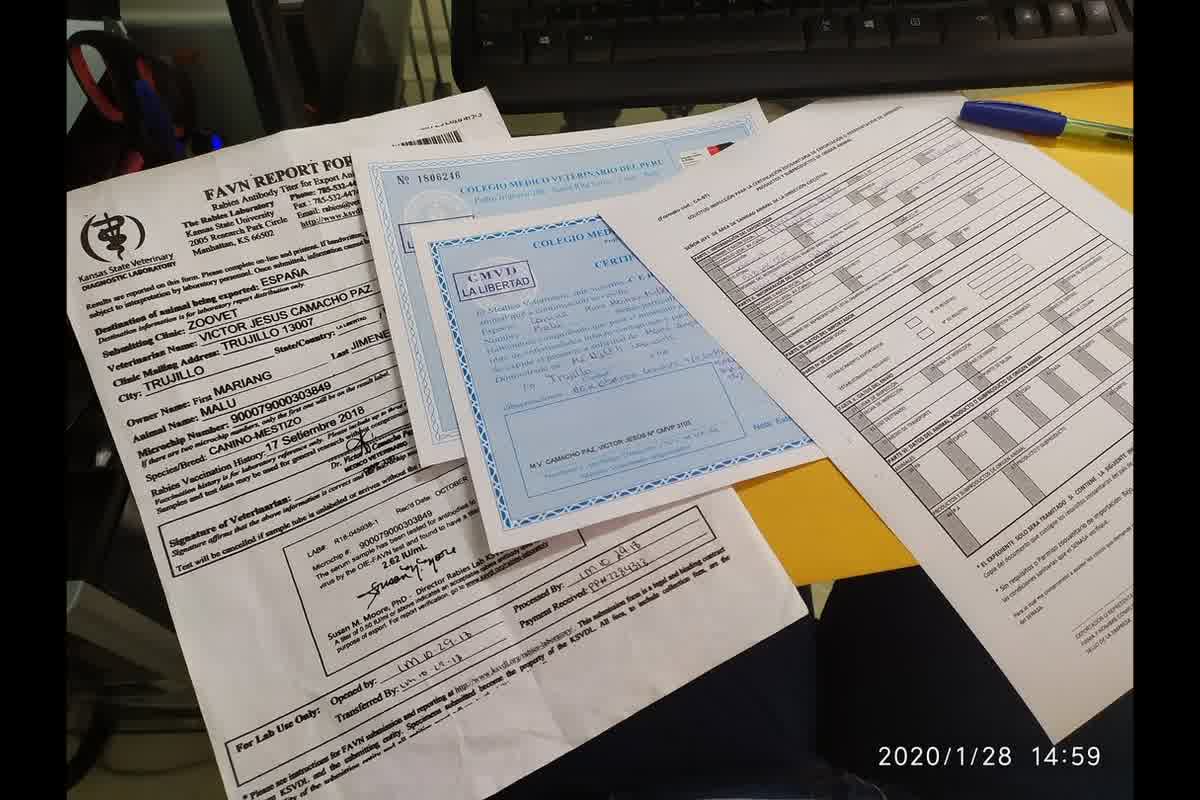
Technical analysis by Dr. Jessica Camacho on the RNATT, the anti-rabies serological titer. Requirements for the European Union, 30-day deadlines and validity of the 0.5 UI/mL threshold.
The vaccination certificate does not prove that an animal is immune to rabies, only that it received a dose of antigen. To enter territories free of the disease or with strict eradication programs, the authority requires the rabies titer test (RNATT), or antibody titer, to verify that the immune system produced at least 0.5 IU/mL of neutralizing antibodies. In Trujillo, we receive families who are unaware that a sampling carried out before day 30 post-vaccination invalidates the entire export process to the European Union.
The legal validity of a rabies vaccine begins 21 days after its application according to Regulation (EU) 576/2013, but the kinetics of neutralizing antibodies require a longer margin to reach the safety threshold. The rabies titer test (RNATT) measures the ability of the animal's serum to neutralize the virus under controlled laboratory conditions. A dog can be correctly vaccinated and yet present a primary vaccine failure that places it below the levels required by international regulations.
The humoral response depends on individual factors such as age, nutritional status, and metabolic stress load during the consultation. If the titer is less than 0.5 IU/mL, the process must be restarted with a new booster dose and a new waiting period for sampling. The immunological foundations of this test and the RFFIT or FAVN methodologies are detailed in our Technical Description of the Post-rabies vaccination compliant with international movement regulations Humoral Response and Methodological Fundamentals of Viral Neutralization Tests (RFFIT and FAVN) in Small Animals.
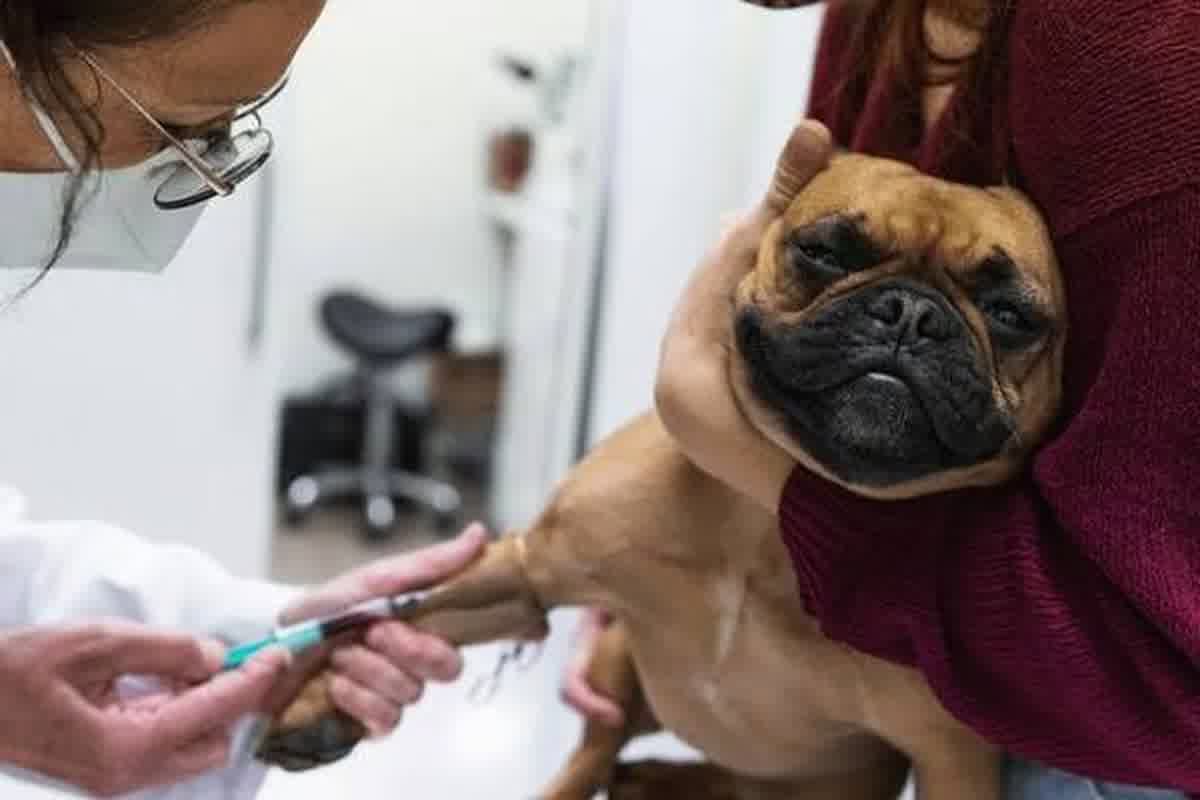
Blood sampling for RNATT should be performed at least 30 days after vaccination and provided that the ISO 11784/11785 microchip has been implanted before the antigen dose. Taking the sample on the 28th or 29th is the error we see most in consultations in Trujillo and guarantees the rejection of the file at the border inspection point. The laboratory that processes the sample must be approved by the European Commission or the competent authority of the destination country; Results from local laboratories without international accreditation are not valid for official endorsement by SENASA (Peruvian National Agrarian Health Service).
The logistics of shipping serum from Peru to laboratories in the United States or Europe require a strict cold chain to avoid hemolysis of the sample. A degraded sample generates erratic or outright unprocessable results, forcing the owner to pay for a second shipment and delay their moving plans. The sampling date in the laboratory report is unalterable and determines the start of the mandatory three-month waiting period required by most countries to allow entry without official quarantine.
The European Union, the United Kingdom, Japan, Australia and New Zealand require the RNATT for animals coming from countries that they do not consider rabies-free, such as Peru. Once a favorable result greater than 0.5 IU/mL is obtained, the titer is valid for life as long as the anti-rabies vaccination compliant with international movement regulations remains current without a single day of interruption in the annual boosters. If the owner forgets to revaccinate before the expiration date of the previous dose, the serological titer loses its validity and the animal must undergo sampling and the waiting period again.
This requirement is not negotiable nor is it subject to the discretion of the customs inspector. The original laboratory document must accompany the official veterinary export certificate (health certificate) during all international transit. In our clinical experience, the loss of the original report or the presentation of simple copies is a reason for the animal to be detained at the destination airport. Traceability between the microchip number recorded in the serology report and the number detected by the border officer's scanner must be absolute and without single-digit discrepancies.
Microchip implantation should be the first chronological step before any vaccination or serological test. If the dog already has a 10-digit microchip or one that does not meet the FDX-B standard, a new device must be fitted and revaccinated under the identity of that new chip before proceeding with the RNATT. The international laboratory will reject any sample where the microchip number is not clearly identified and linked to the current vaccination protocol by a registered veterinary doctor.
The patient's general health status directly influences the production of neutralizing antibodies after vaccination. A dog with active parasitosis or chronic inflammatory processes diverts its immune resources, increasing the risk of a result below the threshold of 0.5 IU/mL. At Zoovet Travel Trujillo we run a clinical screening prior to sampling to ensure that the animal's immune system is in optimal condition to respond to the vaccine stimulus. This technical precaution avoids the unnecessary expense of sending samples that are destined for analytical failure due to lack of biological preparation.
Trip planning must contemplate a margin of at least four months from the sample collection to the departure date. Processing time in international laboratories usually ranges between 3 and 6 weeks, to which is added the regulatory waiting period of 90 days required by destinations such as Spain or France. Trying to speed up these deadlines by putting pressure on the veterinarian or finding documentary shortcuts only exposes the animal to being deported or sent to a quarantine station with high costs borne by the owner.
An error in the sampling interval or sending serum to non-accredited laboratories will result in your dog being banned from entering the European Union. Zoovet Travel manages the technical sample collection and international logistics to authorized laboratories from Trujillo to guarantee a valid serology result. to audit your health schedule before time becomes your worst enemy. Secure your move with scientific support and experience in international regulation.
Calle Cuba 241, Urb. El Recreo — Trujillo, Perú