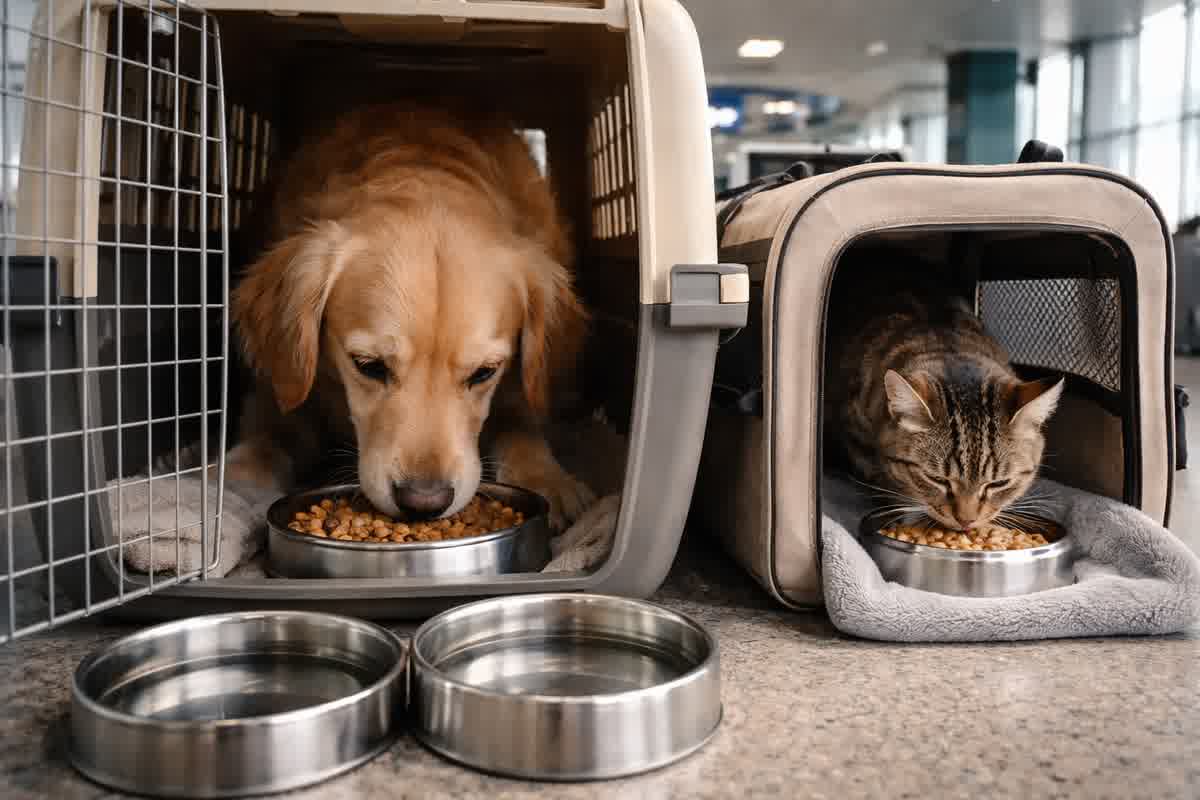
Clinical guide for feeding dogs and cats before and during a flight: food and water windows, what to avoid, and how to manage layovers without decompensation.
In-flight vomiting rarely originates in the aircraft. It originates in the wrong breakfast and in the anxiety of “not letting them go hungry.” When that vomiting occurs inside the kennel, the animal gets dirty, cold, stressed and arrives at destination with an irritated digestive system.
In practice in Trujillo, Peru, the most repeated error is changing the routine on the day of travel. Feeding before and during flight works when it is conservative: less variation, less volume, more control of timing.
Cabin pressure is lower than at sea level. That hypobaria changes bodily perception: abdominal distension, nausea and increased gas become more likely, especially in anxious animals. If the stomach is full, the probability of regurgitation or vomiting increases without any underlying disease.
Stress also plays a role. The animal arrives at the airport with noise, new smells, temperature changes and hours of waiting. In that context, gastric emptying slows. Food that digests uneventfully at home can remain in the stomach longer and become vomitable content during boarding.
Many owners interpret food as a calming agent. In clinic we see the opposite: increased food volume on a day of stress increases digestive events. The operational detail is set out in Metabolic stress in flight: why some dogs decompensate without being ill because it is not about hunger; it is about physiological tolerance under stress.
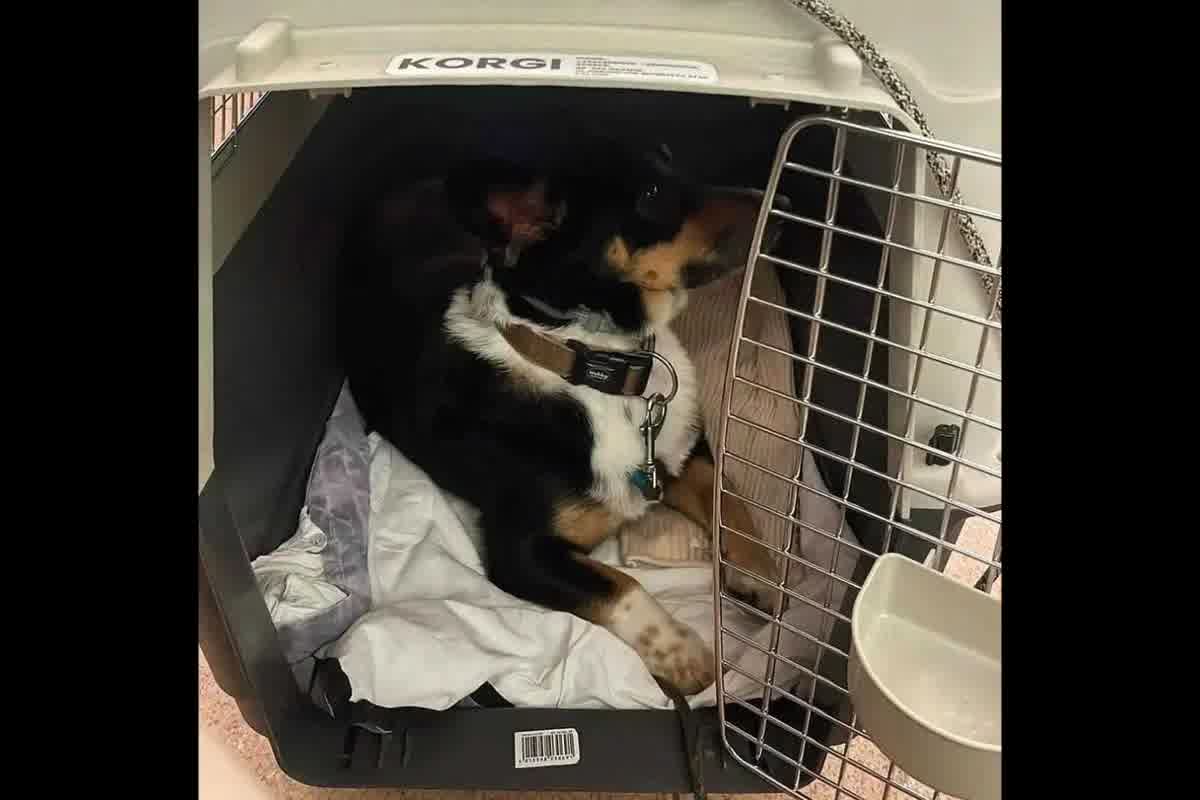
In a healthy adult, the last full meal usually works best if it occurs 6 to 8 hours before boarding. That window reduces gastric volume without causing a sharp drop in energy in most dogs and cats. When the flight departs early, the cleanest adjustment is to bring forward the previous day’s dinner, not to force an early breakfast. In that window, feeding before and during flight reduces incidents during boarding.
A small snack 3 to 4 hours before can be useful if the animal tends to bile from prolonged fasting. Small means small: a fraction of their usual ration, not a new meal. When used, the criterion is not “so they eat something,” it is to avoid an overly empty stomach in an animal that acidifies easily.
Water is managed differently. Withholding it from the night before causes dehydration and intense thirst, which increases panting and anxiety. In most cases, water can remain available until leaving home and then be offered in small amounts during the wait. In Trujillo, Peru, the typical scene is an animal that arrives at the airport thirsty because “they couldn’t drink anything,” and that thirst ends in rapid intakes that also favour vomiting.
On short flights, the best strategy is usually not to give food during the journey. The aim is to avoid the nausea–vomiting–food refusal cycle. If the animal travels in hold, there is also no direct supervision and any episode becomes clinically more costly.
On long layovers, the risk changes. The key is to keep the known diet and fractionate. A minimal portion of the usual food, offered when the animal is already calm, tends to be tolerated better than random snacks. What is not anticipated is that diarrhoea from new food in transit can trigger additional controls and complicate hygienic handling logistics.
Water during layovers should be frequent and in small amounts. If a full bowl is offered to an excited animal, many drink quickly and swallow air. That translates into distension and regurgitation. A simple approach that works is to offer sips, wait, and repeat, instead of a single large intake.
What to give: the usual diet. If the animal eats kibble, keep the same. If they eat a home-prepared diet, keep the same composition. The journey is not the day to “improve” feeding. The digestive system rewards stability, not intention.
What to avoid: fatty food, excessive treats, dairy if not usually part of the diet, recreational bones, and any new food “to make them feel better.” It is also advisable to avoid large portions just before departure, even with known foods, because volume is the factor that correlates most with vomiting.
In cats, post-stress food refusal appears more often than in dogs. Forcing food in an anxious cat usually worsens the picture. A conservative approach is to prioritise hydration and allow them to resume their diet when the environment is stable.
Define the real door-to-door duration, not just flight hours. A 4-hour journey can become 10 if you add transfer, check-in, waiting and layover. The feeding plan is built on that total, because the animal’s tolerance is measured in hours of continuous stress.
Review the animal’s digestive history with clinical honesty. A dog with motion-related vomiting or a cat that stops eating under stress is not managed like a stable animal. In those cases, feeding before and during flight requires adjusting volume and timing with your primary veterinarian, because some animals do not tolerate long fasts and others do not tolerate snacks.
Prepare the kennel as a feeding scenario. A fixed water container reduces spillage. If travelling with a blanket, avoid fabrics that soak easily and cool. When vomiting or diarrhoea occurs, the difference between control and chaos is often environmental management, not the food itself.
Decide what you will do in case of delay. Delays change windows and push feeding into a noisy, crowded place. A written plan of minimal portions and fractionated water avoids impulsive decisions at the counter. When logistics tighten, a conservative plan holds up better than improvisation.
A digestive episode in flight can turn a simple transfer into an arrival with dehydration, cold and complex hygienic handling. Zoovet Travel reviews the clinical case and designs a feeding plan before and during flight integrated with the itinerary and type of transport from Trujillo, Peru. The difference often lies in controlling volume and timing before the airport controls the rest.
Calle Cuba 241, Urb. El Recreo — Trujillo, Perú